Sachets Without the Sales Pitch: Herbal Bundles for Drawers, Shoes and Bedside Tables
There is a particular kind of satisfaction in opening a drawer and meeting the smell of lavender rather than the faint plasticky sigh of a wardrobe. Herbal sachets promise that small pleasure. They also attract a good deal of overstatement. So let us be clear from the start: a cloth bundle of dried herbs is not a pest-control service, a sleep treatment or a replacement for cleaning. It is a household habit with a pleasant scent, a bit of tradition behind it and some sensible limits.
That is not a reason to dismiss it. In a British home where the airing cupboard doubles as a linen store and the shoe basket has seen things no nose should know about, a well-made sachet can earn its place. You just need to ask it to do the right job.
Start With What a Sachet Can Actually Do
A sachet is essentially dried plant material in a breathable bag. It releases scent as the herbs are disturbed, and that scent can make a space feel cared for. Some herbs, such as lavender and rosemary, have a long folk reputation for keeping linen fresh and discouraging cloth moths. Modern pest controllers are rightly cautious: scent may deter a few adults from settling, but it will not kill eggs or larvae already in a jumper. If you have a serious clothes-moth problem, wash or freeze affected items, clean the cupboard thoroughly and consider professional advice. A sachet is the finishing touch, not the whole strategy.
Beyond scent, a sachet can absorb a little moisture if you include dry rice or a paper pouch of bicarbonate of soda. That is useful in shoes and gym bags. It is not a dehumidifier. In a damp UK flat, the real answer is ventilation and heat, not a bigger bag of lavender.
The Basic Kit: Cloth, Filling and Somewhere Dry
You do not need much. Small cotton or linen bags are ideal because they breathe. Muslin works well if you want a stronger scent, though it sheds a little dust. Drawstring bags are easy; simple squares sewn on three sides are cheaper. Avoid plastic and foil, which trap moisture and defeat the purpose. Pinking shears help stop the edges fraying.
For filling, use dried herbs that are genuinely dry — crisp, not leathery. A typical 10cm bag takes two to four tablespoons of loose herb, depending on how strong you want it. You can add a base material such as dry rice, flaxseed or unscented wood shavings to bulk it out and give the bag a pleasing weight. If you want the moisture-absorbing trick for shoes, put a teaspoon of bicarbonate of soda inside a small paper tea bag or a very fine cotton pouch first, so it does not sift through the weave.
Label each bag with the contents and the date. This is not fussiness. Herbs fade, and a bag that has been sitting in a drawer since last winter is mostly decoration.
Four Botanicals That Pull Their Weight
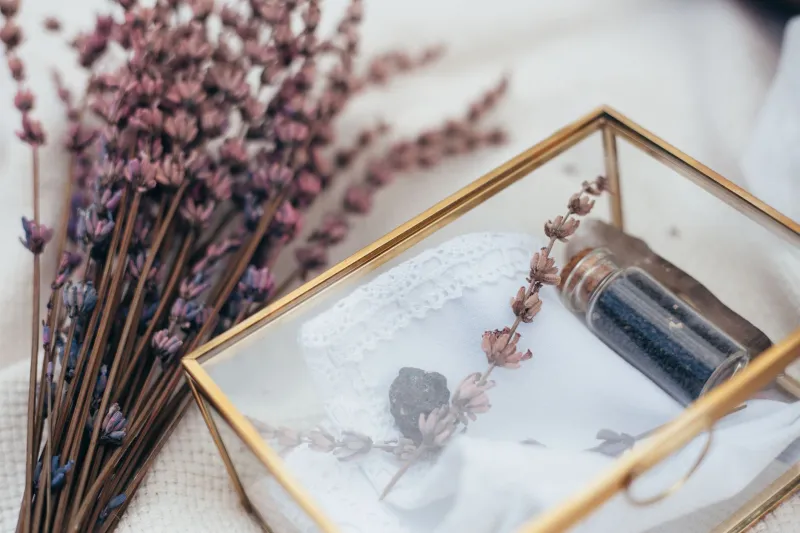
Lavender is the obvious starting point, and for good reason. Dried lavender buds hold their scent well, especially if you crush a few between your fingers now and then. Buy food-grade or cosmetic-grade dried lavender from a reputable UK supplier, or dry your own from the garden. Rosemary is the practical companion: resinous, clean-smelling and traditional in linen cupboards. It pairs well with mint and stands up to the slightly closed smell of a shoe basket. Mint, whether peppermint or spearmint, is sharp and refreshing, but it is loud — use less than you think. Chamomile is gentler, with a soft apple scent, though it fades faster than lavender and is best kept for small bedside bags that you refresh often.
A simple drawer blend is three tablespoons of lavender, one of rosemary and one of mint. For shoes, try two tablespoons of mint, two of rosemary and a small bicarbonate pouch. For a bedside bag, keep it mild: three tablespoons of lavender and one of chamomile, with perhaps a pinch of dried hops if you already have them. Do not overload the bag. A sachet that smells like a perfume counter is not more effective; it is just harder to live with.
Sourcing and Drying Without Fooling Yourself
If you are buying dried herbs, look for suppliers who label the plant clearly and store it away from light. Farmers' markets and established herb shops are good; anonymous online bargains are a gamble. You want herbs that have been dried for household use, not potpourri that has been dyed and doused in synthetic fragrance. If you grow your own, harvest lavender just as the flowers open, tie small bundles and hang them in a dark, airy place until crisp. Strip the buds over a sheet, store them in a glass jar away from the hob and sunlight, and use them within a year.
Foraging is a pleasure, but it is not a shortcut to a safe sachet. Do not pick plants you cannot identify with certainty, and avoid roadside verges and places where dogs walk. A hedgerow guide is not a licence to guess.
Room by Room, With Caveats
In drawers, tuck bags between folded linen rather than directly against delicate silk or knitwear. Give them a squeeze when you open the drawer and replace them every two to three months, or when the scent has gone flat. In shoes, make sure the shoes are dry first — a sachet will not fix damp leather, and trapping moisture only makes the smell worse. Newspaper and a proper airing are better first steps. In bedrooms, hang a bag on the back of a door or place it on a bedside table. Avoid tucking one under a pillow for a baby, and keep small bags away from children who might chew them.
Pets deserve a serious word. Cats and dogs can be sensitive to strong plant aromas, and dried herbs are not risk-free simply because they are natural. Keep sachets out of reach, and avoid filling them with essential oils, tea tree, eucalyptus or pennyroyal. If your cat chews everything, choose a closed drawer rather than an open shelf. Anyone with asthma or a fragrance sensitivity should test a sachet in a ventilated room before committing it to the bedroom.
Finally, remember that herbs and moisture are old enemies. Do not keep sachets in a steamy bathroom, and replace any bag that feels damp or looks marked. Keep them away from candles, heaters and anything that gets hot.
A Small Ritual, Not a Cure
The pleasure of the airing-cupboard apothecary is not in miracle claims. It is in the small maintenance: crushing a bag of lavender to wake it up, refilling the shoe basket before winter, noticing that a drawer smells of rosemary rather than nothing at all. That is old household wisdom at its best — modest, practical and honest about what it can do. This is not medical advice, and a sachet is not a medicine. It is simply a nice thing to make, used sensibly.