What’s in Your Kettle? A Regional Guide to Herbal Infusions That Taste Right
Photo: PagesAndPathsPH, CC0, via Wikimedia Commons
Make a cup of chamomile in a London flat and another in a Highland kitchen, and you may wonder whether you opened the same bag. The flowers are the same. The mug is the same. The difference is often the water coming out of the tap — and it is worth understanding if you drink herbal infusions regularly.
Water is not just a delivery vehicle for leaves and flowers. It carries minerals, has its own pH, and behaves differently depending on where it has travelled through the ground. In the UK, that can change noticeably over relatively short distances. You do not need a laboratory, a water softener or a new personality as a tea obsessive. You just need a rough idea of what your local water is doing and a few small adjustments.
Why the same tea tastes different from Bristol to Aberdeen
Hard water contains more dissolved calcium and magnesium, usually picked up as water moves through limestone and chalk. Soft water has lower levels of those minerals. Much of southern and eastern England sits in harder-water country, while Scotland, Wales and parts of the west generally have softer supplies. But “generally” is doing a lot of work there: supply zones vary, blends change, and your kettle’s limescale is a more honest guide than a broad map.
If you live in a hard-water area, you will know from the furring inside the kettle, the film on the surface of a cuppa and the way soap behaves. Soft-water areas tend to have less of that drama. Neither is “better” for drinking in a general sense. For herbal infusions, though, the difference can show up in the cup.
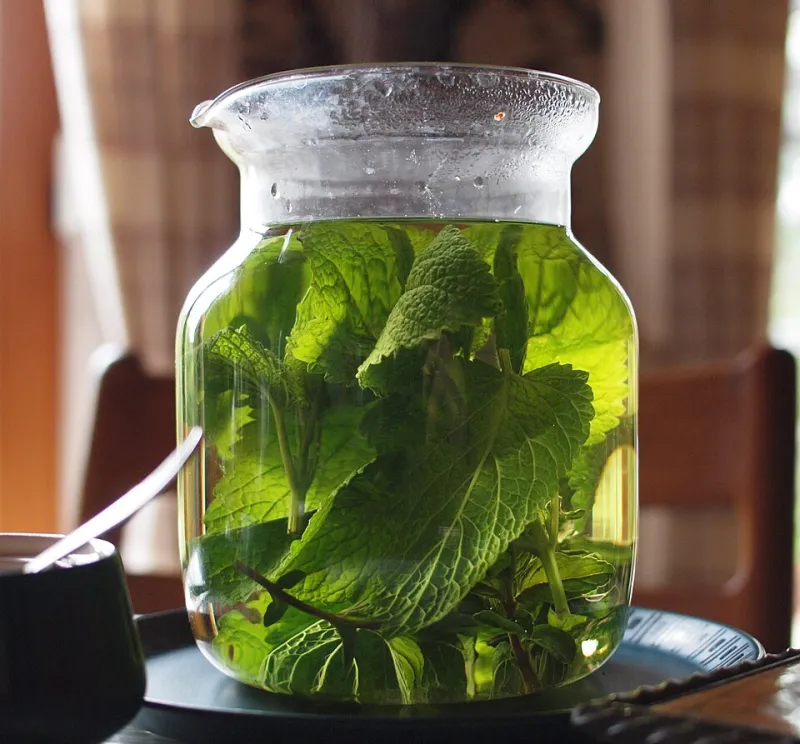
Delicate flowers such as chamomile and lime flower can look duller and taste flatter in very hard water. Peppermint may seem less bright. Nettle can turn a tired olive rather than a fresh green. Robust roots, seeds and barks are usually more forgiving. That is not a rule written in stone, but it is a useful starting point.
What hardness actually does to a brew
Hard water can affect the way plant compounds dissolve and how aromatics reach your nose. It can also influence colour, which matters more than we like to admit: a greyish infusion tastes less appealing before it has even touched your lips. Herbal teas do not contain the same tannin load as black tea, so the effect is often subtler, but it is there.
There is also the question of pH. Water that leans alkaline can mute the brightness of some infusions, while slightly acidic water can make certain colours and flavours pop. This is one reason a squeeze of lemon changes a cup so dramatically — though it also changes the taste, so it is not a universal fix.
Temperature and time still matter more than water chemistry in most kitchens. A delicate leaf scorched with fully boiling water will taste muddy no matter how soft your supply is. A root left to steep for two minutes will taste thin even if the water is perfect. Treat water as one variable among several, not the villain of the piece.
A practical postcode starting point
In London, where hard water is common, start with filtered water for floral teas. Chamomile, lime flower and rose can benefit from a gentler base. For nettle, sage or thyme, ordinary tap water is often fine, but taste as you go.
In Leeds and other parts of Yorkshire, hardness varies but can be moderate to hard. If your kettle scales quickly, use filtered water for delicate cups and give leaf teas a little more room to breathe — a slightly larger mug or a little more leaf rather than a much longer steep.
In Bristol, water can be harder than people expect. The same advice applies: filter the floral brews, keep the robust ones simple, and do not assume that a soft-water reputation applies to every postcode.
In Cardiff, supplies are often softer, but Welsh Water zones are not uniform. If your herbal tea already tastes bright and the colour is good, change nothing. That is the whole point of adjusting to your own tap rather than to a map.
In Edinburgh and much of Scotland, soft water is the norm, and delicate infusions often taste clearer for it. You may find that you need less leaf or a shorter steep to get the same flavour. Do not overcorrect just because a recipe was written for a hard-water kitchen.
In Aberdeen, soft water is also common. Again, start with less time and taste early. A chamomile that tastes perfect at three minutes in Aberdeen may need five in a hard-water area of southern England.
Adjusting without turning it into a plumbing project
A simple filter jug is the least dramatic solution for delicate teas. You do not need to filter every drop you boil — just the water for the cup where the flavour is most fragile. Use tap water for roots, seeds and sturdy garden herbs, and save the filtered water for flowers.
Try a pre-boil and settle if your water is very hard. Boiling can drop out some temporary hardness, and letting the kettle sit for a moment before pouring can reduce the cloudiness in the cup. It will not turn hard water soft, and it is not a reason to buy equipment you do not need. It is just a small kitchen habit.
Taste at three, five and seven minutes rather than following a packet blindly. If the brew is weak but not bitter, add a little more leaf. If it is bitter, reduce the time or the temperature. For most leafy herbs, water just off the boil is a good place to start. For roots and seeds, a fuller boil and a longer steep usually work better.
Finally, do not fix a flavour problem with lemon unless you actually want lemon. A squeeze can brighten colour and sharpen taste, but it can also flatten the gentle sweetness of chamomile or the soft green note of lemon balm. Adjust the water first, then the lemon.
The two-mug test
If you want to know what your tap is doing, make the same tea twice: one mug with tap water, one with filtered water. Use the same leaf, the same temperature and the same steep time. Compare the colour side by side, then the smell, then the taste. It is a small experiment, but it tells you more than any generic regional chart.
Keep a note on the kettle if you like. “Filter for chamomile, tap for nettle” is the kind of shorthand that makes a kitchen feel understood. Water is local, tea is personal, and the best cup is the one you have adjusted to the place you actually live.