Kettle Economics: A Sensible Guide to Re-Steeping Herbal Tea at Home
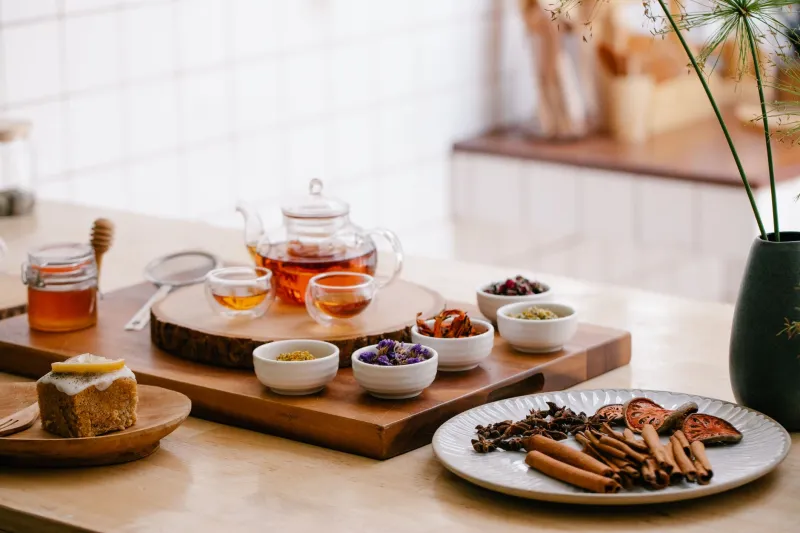
There is a particular moment in a British kitchen when the kettle has boiled, the first cup has been drunk, and a damp tea bag or a spoon of leaves sits waiting by the sink. Do you bin it, or do you give it another go? The answer, as with most things herbal, is: it depends on what is in the mug.
Re-steeping is not a modern money-saving trick invented by thrifty households. In many tea traditions, multiple infusions are completely ordinary. The first pour is often the boldest; later ones can be softer, sweeter or more aromatic. Herbal teas are no different, though they are less predictable than a good oolong. Some herbs have plenty left to give. Others have spent their best flavour in the first three minutes.
Why a second steep can be worth it
Herbal tea is simply plant material and hot water. The first steep pulls out the easy, water-soluble compounds — the bright mint oils, the warm ginger notes, the reddish colour of rooibos. A second steep works on what remains. It is usually gentler, which is exactly why some people prefer it.
The thrift is real, but it is not the whole story. A fair second cup means less waste, a little more value from a good ingredient, and a slower rhythm around the kettle. It also encourages you to taste what you are drinking rather than treating tea as a background habit.
The catch is that re-steeping rewards better-quality leaves and flowers. A dusty supermarket bag made from fine-cut fannings will often give one decent cup and then a vague, papery second. Loose leaf, or a bag with visibly larger pieces, tends to hold up better. That is not a rule about price. It is a rule about surface area and how much of the plant is actually in the bag.
Herbs that usually take a second round
Some cupboard staples are generous. Rooibos is one of the most forgiving: the second infusion is often sweeter and less woody than the first. Peppermint can work well if you use whole or fairly intact leaves; the second cup is milder but still recognisably mint. Fennel seed, lightly crushed, will often give a good second pour, though the aniseed softens. Ginger — fresh slices or dried pieces — can be steeped twice, especially if you keep the pieces in the mug and top up with hot water.
Nettle and lemon balm are also worth a second go when bought loose. Nettle can taste grassy and mineral the first time and softer the second. Lemon balm loses some of its lemon brightness but keeps a pleasant green herbiness. Hibiscus is bold enough that a second steep often works, though the colour will be lighter and the tartness less sharp.
A practical point for UK kitchens: hard water can make any tea taste flatter. If your kettle furs up quickly, a second steep may taste duller than it should. Filtered water or a descaling routine will do more for your cup than any clever steeping trick.
When one cup is enough
Delicate flowers are usually less obliging. Chamomile is the obvious example: the first cup carries most of the soft apple-like aroma, and the second often tastes like warm hay. Linden flower, rose petals and other fragile blends tend to fade quickly. Very fine-cut blends, including many budget tea bags, can also release everything at once, leaving a second cup thin and slightly bitter.
That is not a failure. It is information. If the second cup smells of not much and tastes like wet cardboard, stop there. Compost the contents and make a fresh one. Re-steeping should improve your day, not turn it into a test of endurance.
A simple method for the second cup
Use fresh water and bring it back to temperature. For most herbal infusions, water just off the boil is fine, though very delicate flowers may prefer slightly cooler water. Give the second steep a little more time than the first — perhaps one to three extra minutes — but taste as you go.
Do not squeeze the bag. Pressing releases fine particles and tannin-like compounds that can make the cup harsh. If your first cup was already strong, make the second shorter rather than longer. And if you are using a tea bag, lift it out rather than leaving it slumped in the mug for the rest of the morning.
A second steep is also a good excuse to use a smaller mug. The flavour is weaker, so a large bucket of hot water will simply taste like disappointment. A modest cup, taken while it is hot, is fairer to the leaf.
Stop when the cup goes quiet
The honest test is taste, not timings on a packet. The second steep should still taste of something — softer, yes, but recognisable. When it turns woody, dusty, or simply watery, you have reached the end. Do not leave a wet tea bag sitting out for hours and then decide to use it again. Freshness matters, and a damp bag left on the draining board is not a bargain.
For loose leaves, a small strainer and a quick rinse between steeps will keep things tidy. Used leaves can go on the compost heap once they have cooled. In a small way, that is the whole point: better cups, less waste, and a bit more attention to what is already in the cupboard.
The second steep will never be identical to the first. That is not the aim. The aim is a fair cup — one that earns its place beside the kettle and makes you think, just for a moment, that the ordinary business of making tea is worth doing properly.