The Case for Something Sharp After Dinner: Reviving British Bitters
There is a moment, about twenty minutes after a heavy Sunday lunch, when the British kitchen traditionally reaches for tea. It is a fine instinct. But there is another option that our grandparents' generation understood rather better than we do, and it comes in a very small glass.
Bitters — dandelion, gentian, chicory, artichoke leaf, angelica — have been part of European eating for centuries. They survive on the continent as amari, as Dutch bitters, as the sharp little pour that arrives unbidden at the end of a long Italian meal. In Britain they have largely retreated into cocktails and the odd bottle at the back of a drinks cabinet. I think that is a loss, and a small one worth reversing.
Bitterness Is a Taste, Not a Punishment
Somewhere along the way, British cooking decided that bitter was a flavour to be managed rather than enjoyed. We kept it in beer and in chicory, and largely surrendered the rest.
But bitterness is one of the five basic tastes, and it does something specific: it wakes the mouth up. Traditionally, bitter herbs were taken shortly before or after eating to encourage digestive secretions — saliva, bile, stomach acid — on the reasonable logic that the body prepares for food when it tastes something sharp. That is the theory behind the aperitif and the digestif alike, and modern herbal practice still uses bitter herbs in much the same way.
What I like about the ritual is not the pharmacology so much as the pause. A small bitter after dinner is a full stop. It says the meal is over, the plates can wait, and there is no need to move immediately to the washing up.
The British Bitters Worth Knowing
Dandelion root is the most accessible of the lot. Roasted, it makes a dark, nutty, faintly bitter tea that has been a British cupboard staple in various guises for generations — and it grows in every verge and back garden in the country. Dig roots in autumn, scrub them, roast at a low heat until deep brown, and grind.
Chicory is dandelion's cultivated cousin, and its root is the backbone of most commercial coffee substitutes. It is gentler in flavour and easy to find.
Gentian is the serious one. Yellow gentian root is intensely bitter — a little goes an extremely long way, and it is the classic ingredient in European digestive bitters. Buy it rather than forage it; wild gentian is not something to go digging up.
Artichoke leaf is milder and slightly sweet-savoury, and it has a decent record in traditional use for sluggish digestion after fatty meals.
Angelica brings a warmer, almost musky note and grows wild in damp British places, though the roots are best left to the experts.
How to Actually Do It
Keep it small. A bitter is not a drink to quench thirst, it is a taste to close a meal.
-
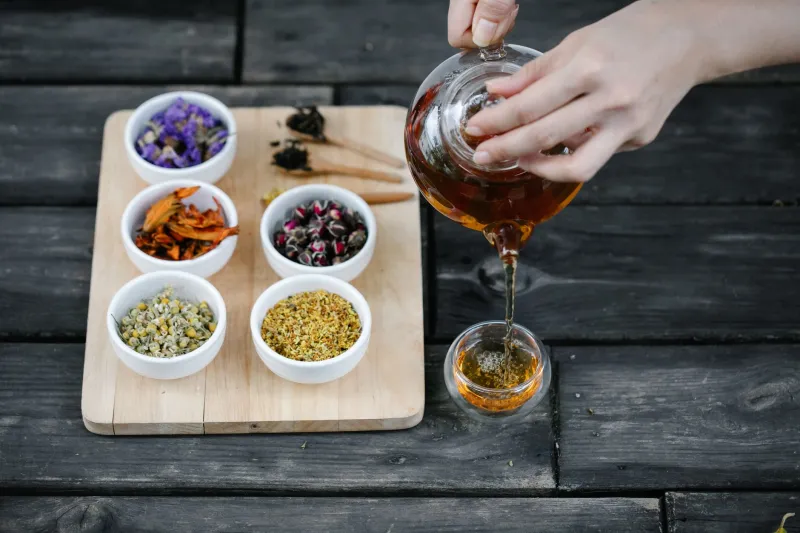
The tea version: one teaspoon of roasted dandelion root or half a teaspoon of chicory root per mug, simmered gently for five to ten minutes rather than merely steeped. Add nothing at first; see how it tastes. A strip of orange peel is a fair compromise if you are new to it.
-
The tincture version: a few drops of a gentian or artichoke preparation in a little water, taken ten minutes before eating or shortly after. Follow the bottle; these are strong.
-
The alcohol-free option: gentian and dandelion tinctures are usually alcohol-based, but glycerites and vinegars exist, and the tea route involves no alcohol at all. If you are driving, avoid the alcoholic sort entirely — a digestif is still a drink.
Start with three or four evenings a week rather than every night, and give it a fortnight before deciding whether you like it. Bitterness is an acquired taste and most people need a handful of tries before the mouth stops objecting.
Where Bitters Are Not a Good Idea
The traditional logic of bitters — stimulate digestion — is exactly why they suit some people and not others.
If you have acid reflux, GORD, gastritis or a peptic ulcer, bitter herbs can make symptoms worse by revving up stomach acid production. Skip them.
If you have gallstones or a bile duct problem, be cautious. Bitters encourage bile flow, which is the point, but it is also why they can provoke discomfort in someone with a blockage. Ask a GP before experimenting.
If you are pregnant or breastfeeding, gentian and angelica in particular are best avoided, and artichoke leaf is not recommended either.
If you take regular medication, check first. Artichoke leaf has been flagged for interactions, and anything taken as a concentrated tincture is a different matter from a mug of roasted dandelion. A pharmacist can tell you quickly whether your prescription list makes bitters a bad idea.
And if you have irritable bowel syndrome or a sensitive gut, bear in mind that bitter is a stimulant taste. It helps some people and unsettles others, so keep the first few cups weak and see how you go.
A Small Ritual, Not a Regimen
The appeal of the after-dinner bitter is that it asks almost nothing of you. It costs pennies if you roast your own roots. It takes five minutes. It is a taste that connects a British kitchen to a European habit several centuries old, and it gives the end of a meal a bit of shape.
You do not need a bottle of anything expensive, and you certainly do not need a supplement regime. One jar of roasted dandelion root by the kettle is enough to start. Steep it, sit down, and let the dinner settle.